
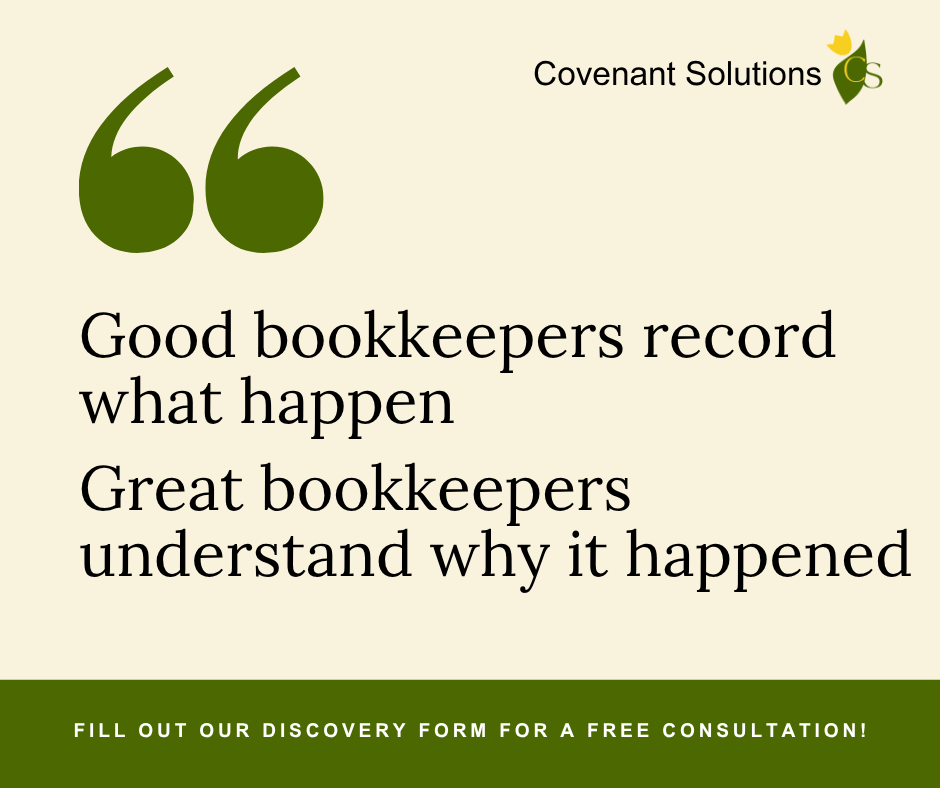
Recording “What Happened” (The Baseline)
Standard bookkeeping is all about precision and history. It captures the mechanical facts of daily business:
- Tracking transactions: Logging every sale, invoice, and bill.
- Reconciling accounts: Matching bank statements to your ledger.
- Maintaining compliance: Keeping an audit trail ready for tax season.
This baseline prevents costly errors, duplicate payments, and missed deadlines, ensuring your foundational data is accurate.
Understanding “Why It Happened” (The Insight)
Great bookkeepers connect the dots across months and quarters. They don’t just hand you a balance sheet; they translate the data into context:
- Spotting margin shifts: Noticing that a dip in profit isn’t bad sales, but a silent creep in software subscription costs or supplier prices.
- Explaining cash flow crunches: Showing why cash feels tight even when revenue looks high on paper (e.g., slow-paying clients tying up receivable cycles).
- Anticipating needs: Helping you plan for upcoming tax payments or payroll surges instead of leaving you to react at the last minute.
Truly understanding the business behind the numbers is what separates a routine data-entry clerk from a high-value financial partner.
If you’re ready for a high-value financial partner, fill out our Discovery Form for a complimentary consultation!
Need Clarity on Your Own Financials?
Stop guessing and start making confident decisions. Complete our quick, guided Discovery Form to align on your bookkeeping needs and schedule a personalized Discovery Call.
Fill Out Our Discovery Form
Written by Mai Sosa
Owner & Faithful Bookkeeper at Covenant Solutions Group
Mai helps small business owners increase profits by optimizing their bookkeeping, untangling backlogged records, and turning confusing financial data into clear, actionable roadmaps for growth.